
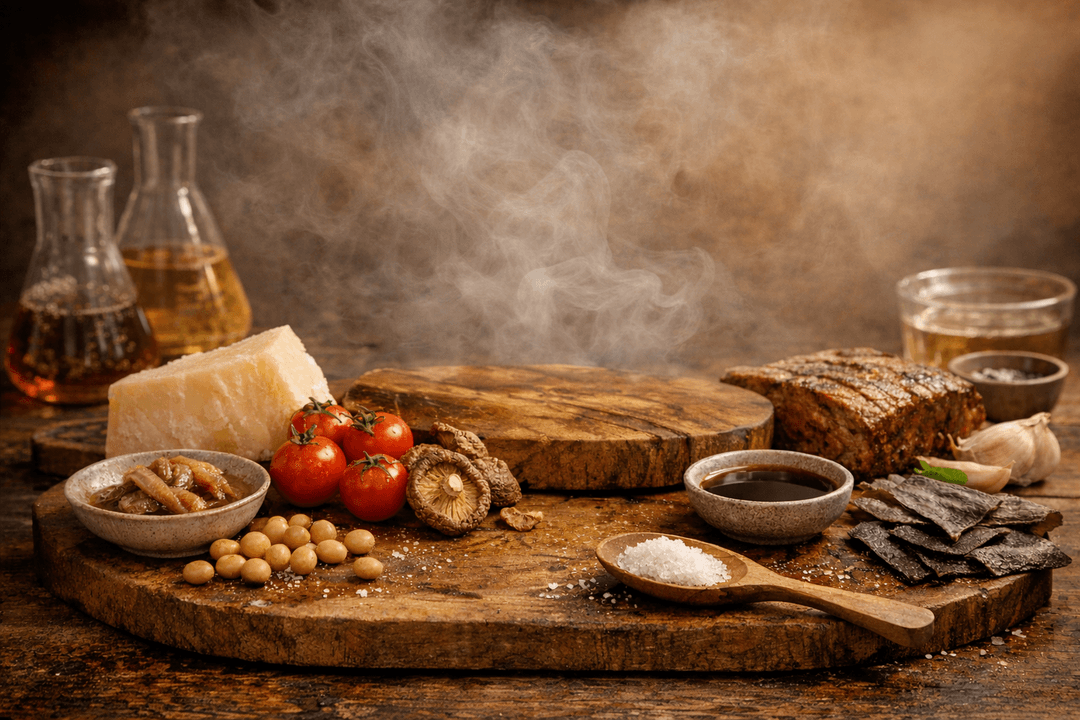
Umami: The Fifth Taste, The Science Behind Deliciousness
Exploring Umami: The Fifth Taste. Discover the science behind this crucial flavor component, from its discovery by Kikunae Ikeda to its chemical basis (glutamates, IMP, GMP) and synergistic effects. Learn why umami signals protein richness, how techniques like slow cooking and fermentation enhance it, and see practical examples in traditional Cypriot and Greek dishes like Trahanas, demonstrating how umami brings depth and balance to modern cooking.
Umami, a word widely used in gastronomy that chefs invest heavily in. What is umami? For centuries, human taste was described through four basic categories: sweet, salty, sour, and bitter. However, this four-part approach could not fully explain the sense of fullness and depth that certain foods offer. The answer came in the early 20th century when Japanese chemist Kikunae Ikeda isolated a substance from kombu seaweed responsible for a particular, unclassifiable taste. In 1908, he named it umami, which means "delicious" or "pleasing to the taste" in Japanese. Umami is now scientifically recognized as the fifth basic taste, with its own specialized receptors on the tongue. It is not a subjective sensation or a culinary trick, but a biological response of the human body to specific chemical molecules.
The Chemistry of Umami
The sensation of umami is mainly triggered by the presence of:
L-glutamic acid (glutamate)
Inosinate (IMP)
Guanylate (GMP)
These molecules exist naturally in many foods and work synergistically. Glutamate alone creates umami, but when combined with nucleotides like IMP and GMP, the effect multiplies exponentially. This phenomenon is known as umami synergy and is a fundamental principle of haute cuisine.
On a physiological level, umami receptors (mainly T1R1/T1R3) are activated and send signals to the brain associated with:
A feeling of fullness
Increased salivation
A lingering aftertaste
This is why umami is not tiring or aggressive, unlike excessive saltiness or sweetness.
Why Umami Attracts Us So Strongly
From an evolutionary perspective, umami acts as a protein indicator. Foods rich in glutamates are often foods of high nutritional value. The human brain has learned to seek them out because historically they were linked to survival, energy, and nourishment.
This explains why:
A dish with umami is considered "satisfying" even in smaller quantities
The need for excessive salt is reduced
The food seems "well-rounded" even without strong seasonings
Natural Sources of Umami
Umami is not an industrial product. It exists naturally in a multitude of foods, especially when they are:
Ripe
Fermented
Dried
Slow-cooked
Foods rich in glutamates:
Ripe tomatoes and cherry tomatoes
Aged cheeses (Parmesan, Pecorino)
Anchovies, sardines
Mushrooms (especially dried)
Seaweed (kombu, nori)
Soy and fermented products (miso, soy sauce)
Foods rich in nucleotides:
Meat (especially cooked or aged)
Fish and seafood
Shiitake mushrooms
The Role of Technique: How Umami is "Born" in Cooking
Umami is enhanced by the right technique. It's not just about the ingredients, but also the process.
Caramelization and Maillard reaction: develop complex flavors that enhance the perception of umami
Slow cooking: releases glutamates from proteins
Fermentation and aging: dramatically increase umami concentration
A proper fatty base (butter, fat): acts as a flavor carrier
This is why dishes with simple ingredients but correct technique often have greater depth than complex recipes.
Combinations That Elevate Umami
High cuisine relies not on individual ingredients but on combinations:
Tomato + aged cheese
Anchovy + butter
Mushrooms + meat
Soy + fish
Parmesan + lemon (umami + acidity)
In these combinations, umami is not added. It is revealed.
Umami and Modern Gastronomy
Modern cuisine does not chase excess, but balance. Umami allows for:
Salt reduction
Cleaner recipes
Emphasis on the primary ingredient
It is no coincidence that it is a foundation of both Japanese cuisine and modern European haute cuisine.
Conclusion
Umami is not a trend. It is a tool for understanding taste. It explains why some dishes move us without us knowing why. Why simplicity can be profound. And why deliciousness, ultimately, is as much a matter of science as it is of knowledge.
Umami in Practice: How Theory Translates to the Plate
Understanding umami only gains real meaning when applied to culinary practice. It is not an abstract concept, but a mechanism activated through specific ingredients, techniques, and combinations. Below are examples of recipes, either forthcoming or already on the site, that show how umami works in practice and why it makes a difference.
Pasta with Cherry Tomatoes, Butter, and Anchovy
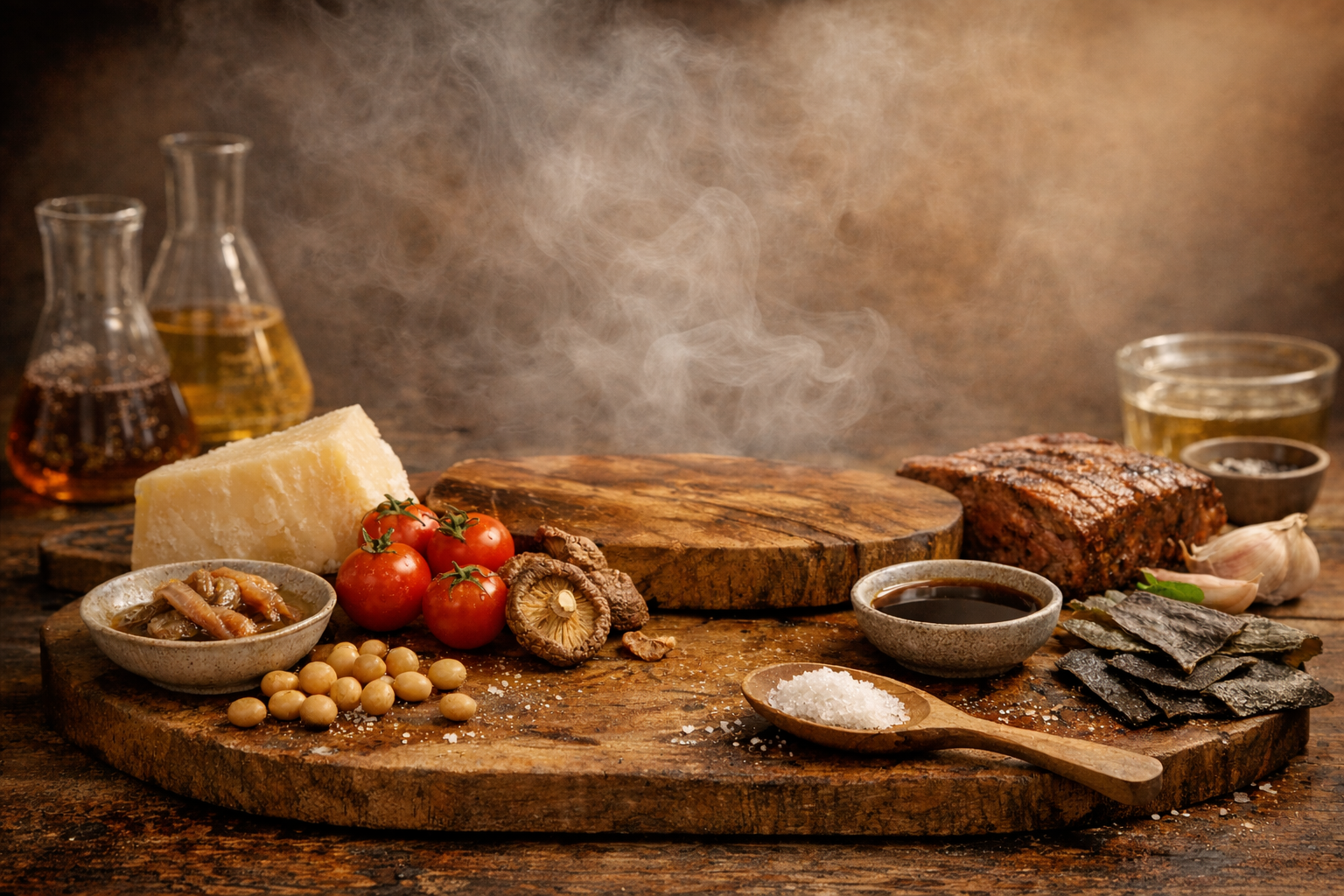
In this recipe, umami does not come from a single ingredient, but from their combination. Ripe cherry tomatoes naturally contain glutamates, while anchovies are rich in inosinates, creating a strong umami synergy. The butter acts as a flavor carrier, allowing these molecules to diffuse evenly throughout the sauce. The result is not intensely "fishy" or heavy, but deep and balanced. The anchovies are not perceived as a separate ingredient; they simply enhance the overall sense of fullness in the dish.
Kebab
The Kebab is a characteristic example of umami derived almost exclusively from the raw material and technique. Lamb or a mix of lamb and beef mince is naturally rich in glutamates. Proper kneading and high-temperature grilling activate Maillard reactions, enhancing flavor complexity. The absence of strong seasonings is not a lack, but a conscious choice that allows the natural umami of the meat to emerge. This is an example where umami functions autonomously, without the need for added enhancers.
Trahana
Trahana is one of the most authentic and timeless examples of natural umami in traditional Greek and Cypriot cuisine. Its base, wheat and milk that have undergone fermentation and drying, is rich in natural glutamates. During fermentation, milk proteins break down into amino acids, which activate umami receptors. When trahana is simmered, these elements are enhanced, creating a sense of fullness that does not rely on fat content or the intensity of spices. The combination with halloumi adds saltiness and extra protein, completing the dish flavorfully and nutritionally.
What Do All These Examples Have in Common?
Despite the different cuisines and techniques, these examples share a common thread: umami does not occur by chance. It is the result of correct raw material selection, understanding the process, and respecting the role of each component. It is not added to impress; it is used to provide cohesion.
Conclusion
When umami becomes a conscious tool, cooking changes character. Dishes become cleaner, more balanced, and less dependent on excessive salt or strong seasonings. Deliciousness ceases to be a matter of luck and transforms into the result of knowledge and correct application. And that, ultimately, is where the science of taste meets the essence of everyday cooking.