1. In a large bowl or the bowl of a stand mixer, combine the flour and salt, and mix. Add the sunflower oil and rub it into the flour with your palms until coarse crumbs form. Add the water and knead until you have a fluffy, soft dough. Cover and set aside for 30 minutes. Take pieces of dough and shape them into logs. Cut 60g pieces from the dough. Shape them into balls. Lightly flour your work surface and take 3 dough balls. Roll them out slightly with a rolling pin, pressing the dough from all sides. If you have a pasta machine, gradually roll out the dough from the thickest setting to the thinnest. Place the 3 dough sheets you've formed vertically on your work surface. Brush each sheet with the melted vegetable shortening (about 15ml).
2. Once all 3 sheets are brushed, start rolling up the first sheet, from bottom to top. Place the formed log at the edge of the second sheet and continue rolling. Repeat the same with the third sheet. Take the log and hold it upright. Press the dough downwards; you'll see it open up layer by layer. Press it gently with your palm. Set it aside for 10-15 minutes for the shortening to firm up. Flour your work surface and roll out the flatbread into a round shape, about 18-20 cm in diameter. Roll carefully to ensure the circles formed by rolling remain in the center. If making many flatbreads, place non-stick parchment paper, lightly floured, between them. At this stage, you can also store them in the freezer.
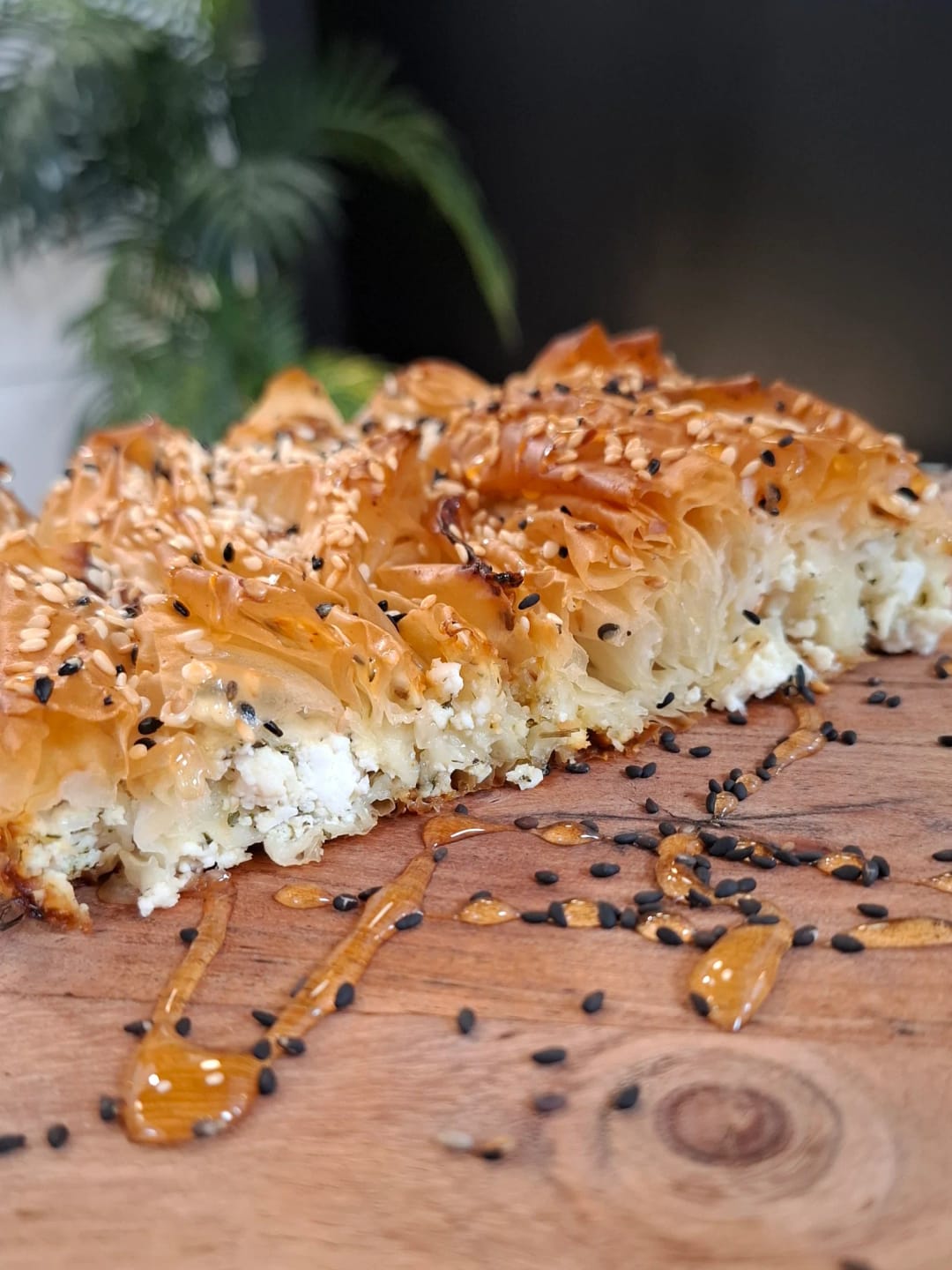
3. Place the saj pan (a convex griddle) or a non-stick frying pan on the heat and brush with a little olive oil. Once hot, place the Karpasia flatbread in the pan, brush the top with olive oil, and reduce the heat to medium-low. The low heat will allow the inner layers to cook through. Let the flatbread brown on one side, then flip it to the other. If needed, brush with a little more olive oil. Remove the Karpasia flatbread from the pan and drizzle generously with honey.